Ginni Rometty and Evan Spiegel: Two Very Different Kinds of Power
Biography, IBM, Snapchat, and the very different work that made each of them known
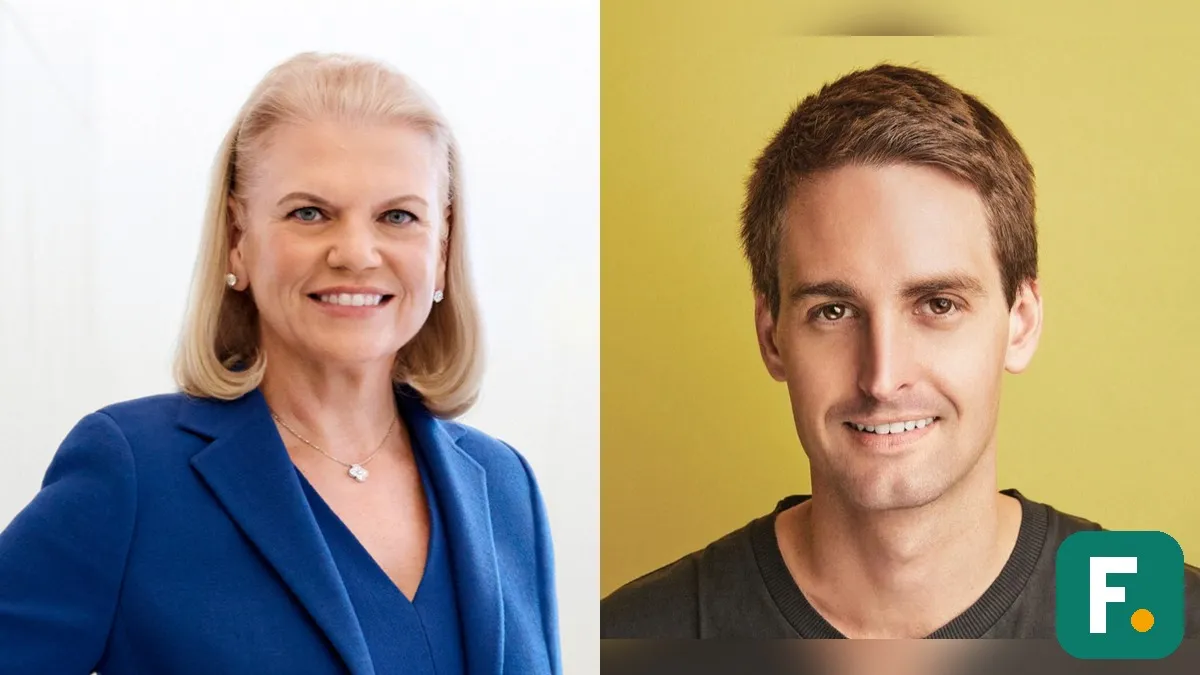
Two people, two very different roads to the top of technology. Ginni Rometty was fifty four when she became the first woman to run IBM, after thirty years of working her way up inside the company. Evan Spiegel was twenty one when the photo app he built with two classmates at Stanford began to take off, and twenty six when it went public. She came from a working class home in Chicago where money was short. He came from a wealthy home in Los Angeles where design was part of daily life. They have never met in any public record, they have never worked together, and they are not related. This article tells both stories in plain language.
Put side by side, the two lives show how different success can look. Rometty changed a century old company from the inside, pushing it toward cloud computing and artificial intelligence while its sales fell. Spiegel changed how people talk, with photos that vanish after they are seen. One measured success in decades of steady work. The other measured it in an idea that spread around the world in a few years. What follows is the plain record of both lives.
Quick Facts: Ginni Rometty and Evan Spiegel
| Detail | Ginni Rometty | Evan Spiegel |
|---|---|---|
| Full name | Virginia Marie Nicosia, known as Ginni Rometty | Evan Thomas Spiegel |
| Born | 29 July 1957, Chicago, Illinois, USA | 4 June 1990, Los Angeles, California, USA |
| Died | Living | Living |
| Main field | Business leadership and technology | Technology entrepreneurship and social media |
| Best known for | First woman chief executive of IBM, 2012 to 2020 | Co founder and chief executive of Snap Inc., maker of Snapchat |
| Career length | IBM from 1981 to 2020, chief executive 2012 to 2020 | Snapchat and Snap Inc. from 2011, still active in 2026 |
| Public profile | Private and disciplined leader, author of Good Power | Private and low key founder, rarely gives interviews |
| Reported wealth | Online estimates put it at roughly $60 million to $80 million, none verified | Forbes puts it at about $2.5 billion, Celebrity Net Worth at about $2 billion |
A note on money first. Nobody outside these two people knows exactly how much either of them is worth, because salaries, shares, and private property are not published in one place. The numbers in this article come from public estimates, and they are only a rough guide. Where the estimates disagree, the article says so. Rometty's fortune is only guessed at, and Spiegel's fortune rises and falls with the price of Snap shares.
Who Is Ginni Rometty?
An American business executive, Ginni Rometty led IBM as its first woman chief executive, after joining the company as a systems engineer in 1981 and spending thirty years rising through its ranks. She worked in consulting, services, sales, marketing, and strategy, and she was named president and chief executive on January 1, 2012. She was the ninth person to run the company in its hundred year history, and the first woman to do so. She held the top job until April 2020 and retired from the company at the end of that year, after thirty nine years there.
Rometty is known for two things above all. The first is the way she climbed: she did not arrive from outside with a ready made plan, she learned the business from the inside, job by job, and she kept saying yes to work that was new to her. The second is the way she led: she pushed IBM away from selling computer hardware and toward cloud computing, data, and artificial intelligence, and she argued that good jobs in technology should be open to people who never went to university for four years. Her book about that idea, published in 2023, is the clearest statement of what she believes power is for.
Ginni Rometty: Childhood and the First Break
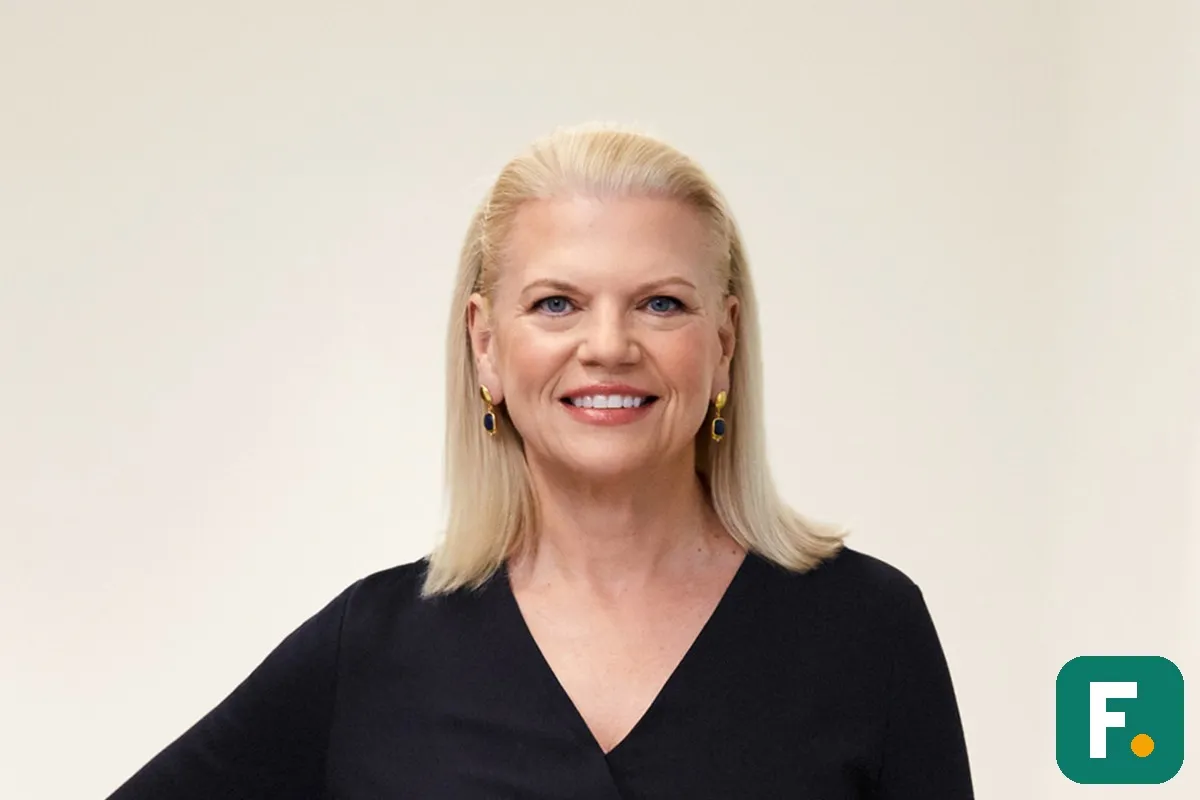
Chicago, Illinois, is where her story starts. Virginia Marie Nicosia was born there on July 29, 1957, the eldest of four children in a working class Italian American family on the south side of the city. Her father worked for his own father, mostly in real estate, and her mother had finished high school just before Ginni was born and stayed at home to look after the children. The family lived in a property owned by her grandparents until Ginni was in the third grade, when they were finally able to buy a house of their own. Her childhood was ordinary and middle class, until she was fifteen. The family had just bought a new home, but before they moved into it, her father left. He told her mother he would never give her anything, and the family was left with no money and four children to feed.
Her mother did not give up. She had never worked outside the home, and she had nothing past high school, but she went back to school at a community college while working two jobs, learning computer skills that would give the family a steady income. Ginni, as the eldest child, became the second adult in the house. She cooked meals, helped her younger siblings with their homework, and went to their school meetings. She has said since that her father's absence began long before he left, and that taking responsibility so young gave her a sense of accountability that stayed with her for the rest of her life. Her great grandmother had shown the same grit a generation earlier, fleeing war torn Belarus and cleaning the Wrigley Building in Chicago at night after she was widowed, and her grandmother had run a lamp shop after losing two husbands.
School was the way out. Ginni won a scholarship from General Motors and began at Northwestern University in Illinois in 1975, studying computer science and electrical engineering at a time when very few women trained as engineers. The scholarship sent her to work at General Motors between her junior and senior years, and it was on a blind date during that time that she met Mark Rometty, a young man who had lost his own father at ten and had helped support his family from a young age. The two married in 1979, the same year Ginni graduated from Northwestern with high honours, with a bachelor degree in computer science and electrical engineering. Mark encouraged her to look beyond General Motors, and in 1981 she interviewed at IBM and joined its Detroit office as a systems engineer. The forty year journey that followed began with that one interview.
- Born in Chicago, Illinois, on July 29, 1957, as Virginia Marie Nicosia, the eldest of four children.
- Her father left the family when she was fifteen, and her mother went back to school and worked two jobs to support four children.
- As the eldest child she cooked, helped with homework, and went to school meetings for her younger siblings.
- Won a General Motors scholarship to Northwestern University in 1975 and graduated with high honours in 1979.
- Met Mark Rometty on a blind date, married him in 1979, and joined IBM as a systems engineer in Detroit in 1981.
Also Read: Tom Kennedy and Anna Wintour: Two Very Different Kinds of Power
Ginni Rometty: The Climb Inside IBM
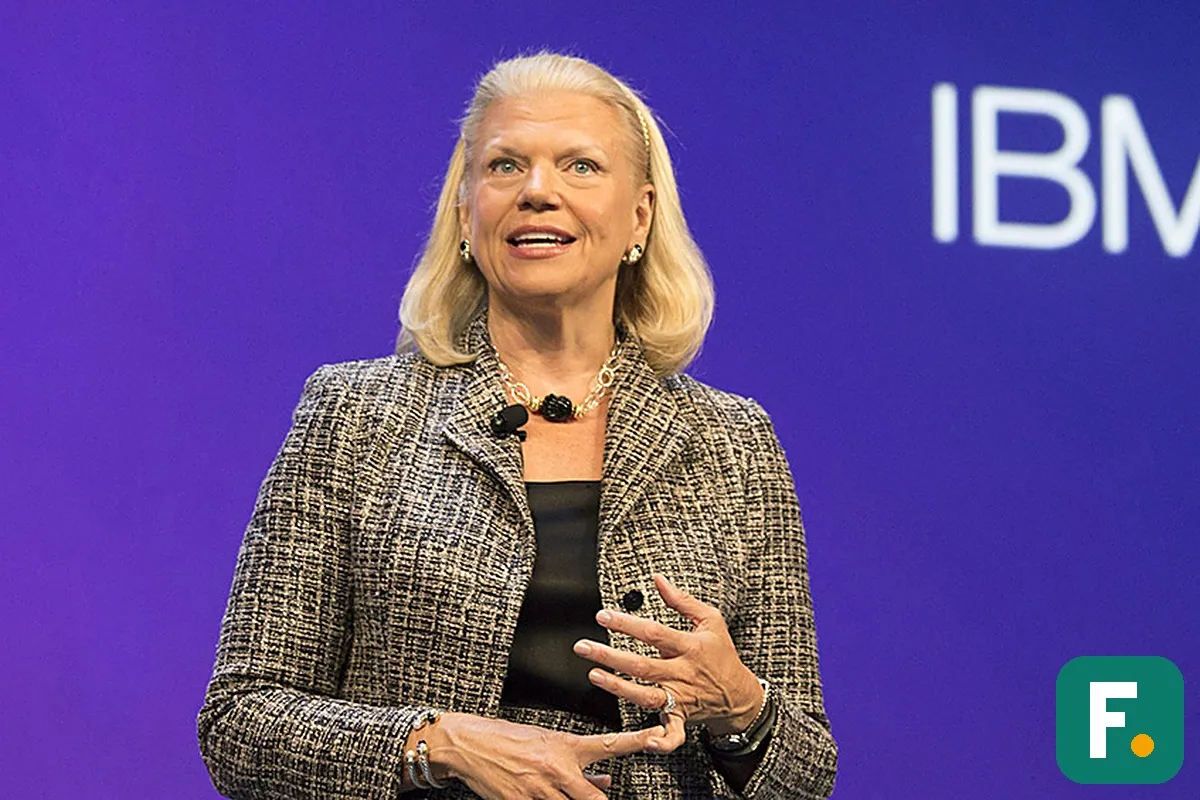
Rometty's first job at IBM was technical, and she stayed close to customers for years. She worked as a systems engineer and then as a consultant, and she spent much of the 1990s in the services business that Louis Gerstner, the chief executive who saved IBM from a huge loss in 1993, had built up. She ran work for banks and insurance companies, learning how big clients actually used technology, and she moved steadily into management. By the end of the decade she was running large parts of the consulting business, and she had a reputation for taking on the hardest jobs and finishing them.
Her defining move before the top job came in 2002. IBM bought the consulting arm of PricewaterhouseCoopers for 3.5 billion dollars, and Rometty helped negotiate the deal and then led the work of joining the two companies together. It was a difficult job, because two large groups of consultants with different cultures had to become one team, and she made it work. In 2005 she was promoted to senior vice president of IBM Global Business Services, the combined consulting business, and from 2009 she was senior vice president and group executive for sales, marketing, and strategy, the job from which IBM chief executives are usually chosen. She was also named one of the most powerful women in American business by Fortune magazine three years in a row.
The climb was not smooth, and it was not quick. It took her thirty years to reach the top, and she has said openly that she almost turned down a big job early in her career because she thought she was not ready. Her husband asked her a question that changed how she thought about risk: would a man have answered the same way? She took the job, and she learned a lesson she has repeated ever since, that growth and comfort never sit together. By 2011, when the board chose the next chief executive, she was the clear choice, because she knew the company from the inside better than anyone else in the running.
- Joined IBM in Detroit in 1981 as a systems engineer, then moved into consulting and services work.
- Helped negotiate the 3.5 billion dollar purchase of the consulting arm of PricewaterhouseCoopers in 2002 and led the integration.
- Promoted to senior vice president of IBM Global Business Services in 2005.
- Senior vice president and group executive for sales, marketing, and strategy from 2009, the usual stepping stone to the top job.
- Named the most powerful woman in American business by Fortune three years in a row.
Ginni Rometty: CEO Years, Watson, Red Hat, and Good Power
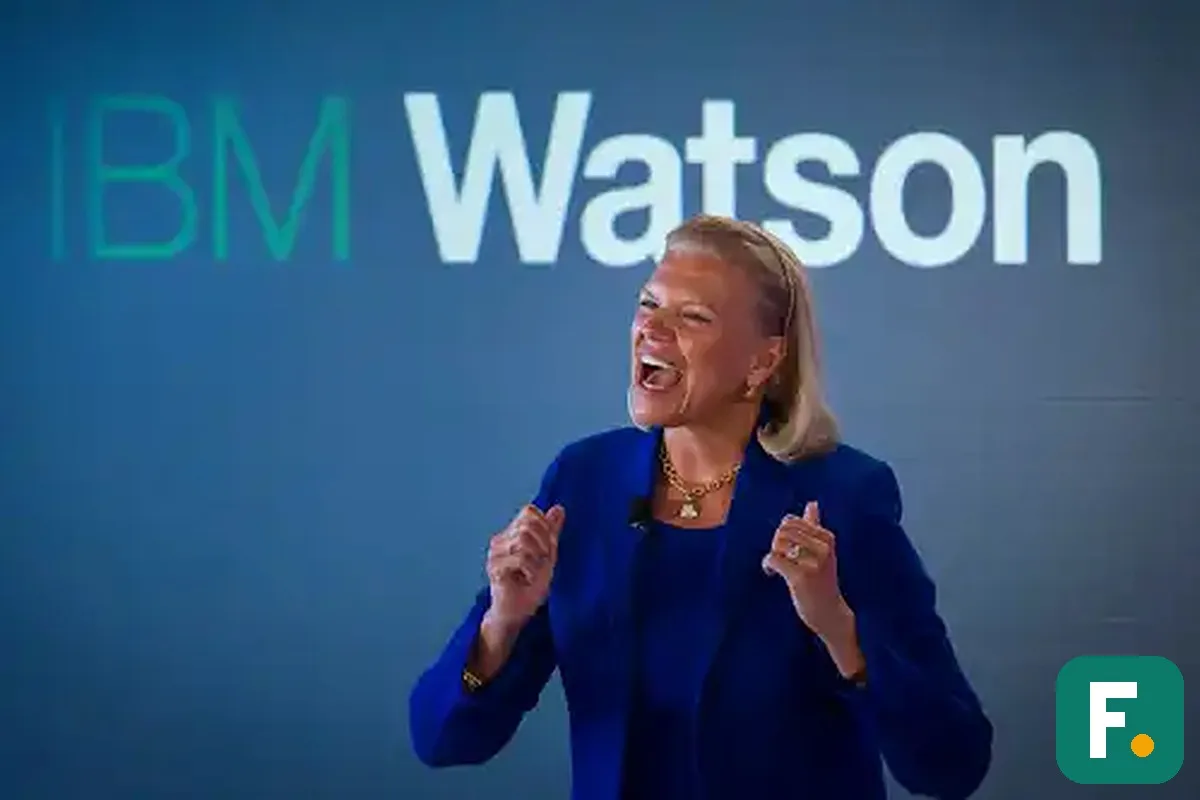
On October 25, 2011, IBM announced that Rometty would be its next president and chief executive, and she took over on January 1, 2012. She added the role of chairman on October 1, 2012, when Sam Palmisano retired. As chief executive she set a clear direction: IBM would stop depending on selling computer hardware and would build its future on cloud computing, data analytics, and cognitive computing, the kind of artificial intelligence that IBM called Watson. Watson had beaten two human champions on the quiz show Jeopardy in 2011, and Rometty wanted to turn that technology into a real business, helping doctors, banks, and other companies make better decisions. She also sold the low profit parts of the business, including the x86 server business and the chip factories, to make room for the new direction.
The change was slow and painful, and the numbers showed it. IBM revenue fell for 22 straight quarters during her time as chief executive, from about 107 billion dollars in 2011 to about 77 billion dollars in 2019, and the share price went sideways while other technology companies soared. Critics said she had bet too much on Watson, which never became the huge business IBM had promised, and that she had moved too slowly. Her answer was a single large deal. In July 2019 IBM completed the purchase of Red Hat, a company that sold software for running programs across different clouds, at a price of 34 billion dollars, the biggest deal IBM had ever done. The deal gave IBM the hybrid cloud position it had failed to build on its own, and by the time she left, the company had built a hybrid cloud business worth about 25 billion dollars a year.
IBM said on January 30, 2020, that she would hand over the chief executive job on April 6, 2020, to Arvind Krishna, who had run the cloud and cognitive software business and had led the Red Hat deal. She stayed on as executive chairman until December 31, 2020, and then retired from IBM after thirty nine years. She did not stop working. In the summer of 2020, after the murder of George Floyd, she and Ken Frazier, the chief executive of Merck, formed OneTen, a coalition of employers committed to hiring one million Black Americans without a four year degree into family sustaining jobs over ten years. Nearly forty large companies had joined by December 2020, and more than sixty joined later. In March 2023 she published Good Power, a book about using power to create positive change, built around five principles, including loving tension, doing hard things respectfully, and celebrating progress instead of waiting for perfection. The book opens with the story of her father leaving, and it ends with the idea that power is not something you collect, it is something you switch on in other people.
"Growth and comfort do not coexist."
Ginni Rometty, Fortune Most Powerful Women Summit, 2011
The line sums up her whole career. She said it on stage in October 2011, three weeks before IBM named her its next chief executive, when she told the story of nearly turning down a big job. She had learned, she said, that the times she learned the most in life were the times she felt nervous and uncertain, and that feeling uncomfortable did not mean she had to tell everyone about it. The same idea runs through her later work on jobs and skills. In 2011 IBM started P-TECH, a six year school programme that combines high school, community college courses, and paid internships, and it has since spread to 28 countries. In 2016 she gave a name to the jobs it was meant to fill, calling them new collar jobs, work that needs real skills rather than a four year degree. Her argument is simple: a degree is one way to prove you can do a job, but it is not the only way, and companies that demand one for every role shut out people who could do the work.
- President and chief executive of IBM from January 1, 2012, the ninth chief executive and the first woman to lead the company, and chairman from October 2012.
- Focused IBM on cloud computing, data, and Watson artificial intelligence, and sold the x86 server business and the chip factories.
- IBM revenue fell for 22 straight quarters in her time as chief executive, from about 107 billion dollars in 2011 to about 77 billion dollars in 2019.
- Completed the 34 billion dollar purchase of Red Hat in July 2019, the largest deal in IBM history.
- Stepped down as chief executive on April 6, 2020, succeeded by Arvind Krishna, and retired from IBM on December 31, 2020, after 39 years.
- Co chair of OneTen, a coalition aiming to hire one million Black Americans without a four year degree into family sustaining jobs over ten years.
- Published Good Power in March 2023, built around five principles for using power to create positive change.
Also Read: Stephen King and Richard LeFrak: Two Very Different Kinds of Power
Who Is Evan Spiegel?
An American entrepreneur, Evan Spiegel built Snapchat, the photo app where messages disappear after they are seen, with two classmates while he was still a student at Stanford University, and he has run its parent company since 2012. He was twenty one years old when the app launched in 2011. By the end of 2012 it had one million daily users, and by 2015 he was the youngest billionaire in the world. When Facebook offered 3 billion dollars for the company in 2013, he said no, and in March 2017 he took the company public at a value of about 24 billion dollars, at the age of twenty six.
Spiegel is known for two things above all. The first is the idea itself: he believed that a photo did not have to last for ever to matter, and that people talk more freely when nothing they send is saved. The second is his stubbornness about that idea: he refused to add a normal social media feed, he refused to sell, and he kept the camera at the centre of the app even when investors and rivals told him to change. He almost never gives interviews, he keeps his private life out of the news, and he still runs the company today, fifteen years after he started it in a classroom.
Evan Spiegel: Childhood and Stanford
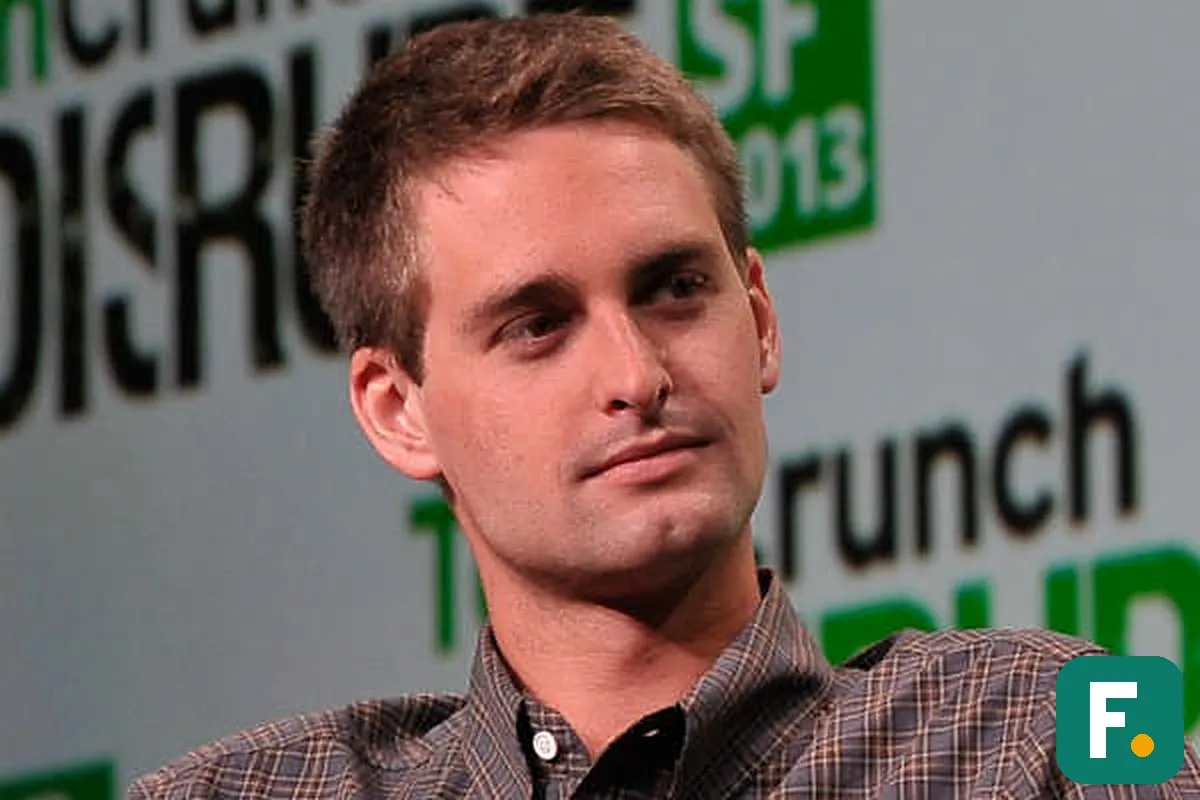
His story starts in Los Angeles, California, where Evan Thomas Spiegel was born on June 4, 1990, the eldest of three children of two lawyers. His parents, John W. Spiegel and Melissa Ann Thomas, both worked in law, and he grew up in Pacific Palisades, a wealthy neighbourhood by the sea. He went to the Crossroads School for Arts and Sciences in Santa Monica, a private school known for its creative families, and while he was still at school he took design classes at the Otis College of Art and Design and at the ArtCenter College of Design in Pasadena. Design, not business, was his first interest, and it stayed at the centre of everything he built later.
In 2008 he went to Stanford University to study product design, and he joined the Kappa Sigma fraternity, where he met Bobby Murphy in 2009. The two worked together on a small project called Future Freshman, a website meant to help school pupils apply to university, but it never took off. Spiegel also spent time in the design world outside class, and he has said since that he grew up with advantages and knew it. He was not a star student, and he did not finish his degree on time, but he was good at one thing: looking at how people actually used their phones, and noticing what felt wrong about it. The photos people sent each other were saved for ever, and that made every message feel heavy and serious, even when it was only a joke between friends.
The idea that changed his life came in a product design class in April 2011, in his third year at Stanford. A classmate, Reggie Brown, said he wished he could send a photo to a girl and have it disappear after she had seen it, so it could never come back to embarrass him. Spiegel saw at once that the wish was bigger than one photo. People were living with a huge burden, he said later, managing a digital version of themselves, and it had taken all the fun out of communicating. He, Murphy, and Brown built a first version of the app, called Picaboo, in the summer of 2011, and they renamed it Snapchat in September 2011. Spiegel left Stanford a few months short of his degree to work on the app full time. He came back years later and completed his remaining credits, graduating in 2018 with a bachelor degree in engineering, with a focus on product design.
- Born in Los Angeles, California, on June 4, 1990, as Evan Thomas Spiegel, the eldest of three children of two lawyers.
- Educated at the Crossroads School for Arts and Sciences in Santa Monica, and took design classes at Otis and ArtCenter while still at school.
- Studied product design at Stanford University from 2008, joined the Kappa Sigma fraternity, and met Bobby Murphy in 2009.
- Built a first version of the disappearing photo app, called Picaboo, with Murphy and Reggie Brown in the summer of 2011.
- Left Stanford shortly before graduating to work on the app, and completed his degree in 2018.
Also Read: Jennifer Lawrence and Jim Taiclet: Two Very Different Kinds of Power
Evan Spiegel: Snapchat, the $3 Billion No, and the IPO
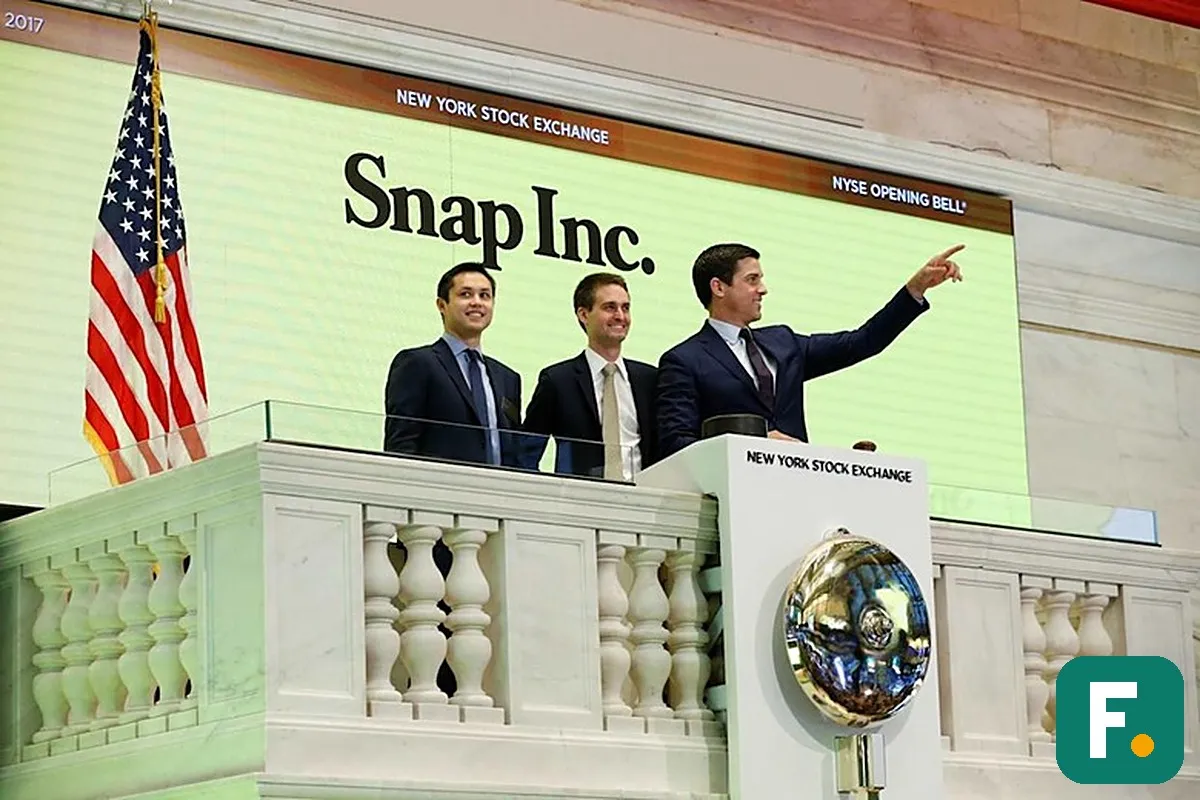
Snapchat grew fast because it felt different from everything else on a phone. A photo or a short video, called a Snap, vanished after it had been seen, so people sent silly faces, quick jokes, and everyday moments they would never have posted on a page that kept everything for ever. By the end of 2012 the app had one million daily users, and it kept doubling. The growth brought a fight over who had invented it. In February 2013 Reggie Brown sued Spiegel and Murphy, saying they had cut him out of the business he had helped start. The case was settled in September 2014, when the company paid Brown 157.5 million dollars and acknowledged him as a co founder. Spiegel has rarely spoken about the dispute since, and the company moved on.
The moment that made his name came in the autumn of 2013. The biggest social network in the world came calling. Facebook put 3 billion dollars on the table for the two year old company, and its chief executive, Mark Zuckerberg, came to talk to Spiegel in person. Spiegel said no. He believed the app was worth more, and he wanted to build a lasting company rather than take a large sum of money and walk away. People called the decision brave or foolish, depending on who was judging, and his adviser later said the real value of the offer was even higher than 3 billion dollars. Spiegel's answer, given to Forbes at the time, was that the chance to build something unique and lasting held more appeal than a short term gain. He was twenty three years old, and he had just turned down more money than most people see in a lifetime.
The bet paid off, at least at first. On March 2, 2017, the company, now called Snap Inc., sold shares to the public at 17 dollars each and was valued at about 24 billion dollars, the largest American technology listing since Facebook in 2012. The listing was unusual, because the shares sold to the public carried no votes at all, so Spiegel and Murphy kept full control of the company even after taking public money. Spiegel, aged twenty six, became one of the youngest chief executives of a newly public major technology company, and the listing made him a billionaire many times over. In 2017 he received a pay package worth about 637.8 million dollars, almost all of it a one off award of shares tied to the listing. The share price fell sharply in the months after the listing, when the first results disappointed investors, but the company stayed independent, and Spiegel stayed in charge.
"Snapchat discards content to focus on the feeling that content brings to you, not the way content looks."
Evan Spiegel, AXS Partner Summit keynote, January 27, 2014
The line, spoken when he was twenty three, is the clearest statement of what Snapchat was for. Most social networks are built to save everything, so that a photo from years ago can still be found and judged. Spiegel built the opposite: a service that throws the photo away, so that only the feeling it brought matters. In the same speech he said that people are not the sum of everything they have said or done or published, they are the result, who they are today, right now. That idea shaped every product that followed, from Stories, which collect a day worth of Snaps into one view, to the filters and lenses that let people change their face on camera. Rivals copied the ideas, Facebook most of all, but the original app kept growing, passing 400 million daily users in 2024.
- Snapchat launched in September 2011, after a first version called Picaboo, and reached one million daily users by the end of 2012.
- Reggie Brown sued Spiegel and Murphy in February 2013, and the case was settled in September 2014 for 157.5 million dollars, with Brown acknowledged as a co founder.
- Facebook offered 3 billion dollars for the company in the autumn of 2013, and Spiegel turned it down.
- Snap Inc. went public on March 2, 2017, at 17 dollars a share, valued at about 24 billion dollars, with the public shares carrying no votes.
- Spiegel was twenty six at the listing, one of the youngest chief executives of a newly public major technology company, and had been the youngest billionaire in the world in 2015.
Evan Spiegel: Spectacles, Family, and Life After the IPO

After the listing Spiegel pushed the company beyond the phone. In September 2016, before the IPO, the company had launched Spectacles, sunglasses with a small camera built in, which record ten second videos from the wearer's point of view and send them to the phone. Spiegel called the glasses a toy, and they were sold in limited numbers for about 130 dollars, first from vending machines that appeared without warning in American cities. The company also bought the maker of Bitmoji, the cartoon avatar app, and built augmented reality lenses that put masks, ears, and effects on a face in real time. The idea was always the same: the camera is not a way to save the past, it is a way to talk. Spiegel has said that the camera has become the main way people use a phone, just as the keyboard was once the main way people used a computer, and that reinventing the camera is the best chance to change how people live and communicate. The company is now betting its future on a new pair of augmented reality glasses, and Spiegel still leads that work himself.
His private life changed in the same years. He began dating Miranda Kerr, the Australian model and entrepreneur, in 2015, after the two met at a Louis Vuitton dinner in Paris. They became engaged in July 2016 and married on May 27, 2017, in a private ceremony at their home in Brentwood, Los Angeles. They have three sons together, Hart, born in May 2018, Myles, born in October 2019, and Pierre, born in February 2024, and Spiegel is also a stepfather to Flynn, Kerr's son from her earlier marriage to the actor Orlando Bloom. The couple keep their children out of the public eye, and they give money through the Spiegel Family Fund, started in 2017, which supports arts, education, housing, human rights, and opportunities for young people. They also helped pay off student debts for art school graduates in 2023.
Spiegel has stayed at the top of the company through good years and bad ones. The share price fell far below its listing price, the company lost money for years, and rivals copied its best ideas, but the app kept its young audience, and the advertising business grew. In 2021 he joined the board of the investment firm Kohlberg Kravis Roberts, known as KKR, a rare outside role for a founder who almost never takes one. He still owns a large part of the company, and his wealth moves up and down with the share price, which is why the estimates differ. Forbes put his fortune at about 2.5 billion dollars in 2025, while Celebrity Net Worth put it at about 2 billion dollars. Either way, he is one of the richest people of his generation, and he built that wealth from an idea he had in a university classroom.
- Launched Spectacles, camera sunglasses, in September 2016, sold for about 130 dollars, and called them a toy.
- Bought the maker of Bitmoji, built Stories and augmented reality lenses, and passed 400 million daily users in 2024.
- Began dating Miranda Kerr in 2015, became engaged in July 2016, and married on May 27, 2017, in Brentwood, Los Angeles.
- Father of three sons, Hart, Myles, and Pierre, and stepfather to Flynn, Kerr's son from her earlier marriage.
- Joined the board of Kohlberg Kravis Roberts in 2021, and started the Spiegel Family Fund in 2017 with Kerr.
Two Careers, Side by Side
Put the two careers next to each other and the contrast is sharp. Rometty needed thirty years and one employer to reach the top, and she was fifty four when she got there. Spiegel needed six years and one idea, and he was twenty six at his listing. Her name became known slowly, through decades of steady work. His name became known almost overnight, through a single idea that spread around the world. Age is only part of the difference. The deeper difference is the kind of power each holds. Hers came from knowing a big organisation inside out and from the trust of its board. His comes from founding a company, owning a large part of it, and making a product that hundreds of millions of people open every day.
- Starting point: Rometty grew up in a working class family in Chicago and paid for university with a scholarship, while Spiegel grew up in a wealthy family in Los Angeles and went to a private school and Stanford.
- First big break: Rometty joined IBM in 1981, at twenty four, and reached the top in 2012, at fifty four. Spiegel launched Snapchat in 2011, at twenty one, and took it public in 2017, at twenty six.
- Work style: Rometty led a huge company through slow change, meetings, and long plans. Spiegel built a small team around one idea and refused to change it, even when Facebook offered him 3 billion dollars.
- Output: Rometty ran IBM for eight years, bought Red Hat for 34 billion dollars, and wrote a book about power. Spiegel built Snapchat, Stories, Spectacles, and augmented reality lenses, and he still runs the company.
- Money: Rometty's wealth is only guessed at, at roughly 60 million to 80 million dollars, with no filing behind the number. Spiegel's wealth is put at about 2 billion to 2.5 billion dollars, and it rises and falls with the share price.
- Public life: Rometty is a private leader who speaks about jobs, skills, and power, and she now works on hiring people without degrees. Spiegel is a private founder who almost never gives interviews, and he keeps his family out of the news.
- Legacy: Rometty changed how a giant old company thinks about cloud, data, and who gets a good job. Spiegel changed how a whole generation talks to each other, with photos that disappear.
- Age at the top: Rometty was named the most powerful woman in American business three years in a row. Spiegel was the youngest billionaire in the world in 2015.
What People Often Get Wrong About Them
Start with the most common confusion. These two people have nothing to do with each other. They are not related, they have never worked together, and no public record links one to the other. They sit together in this article only because each of them reached the top of the technology world in a very different way.
The second mistake is to say Rometty founded IBM, or that she was its first chief executive. She was neither. IBM was founded in 1911, a century before she took over, and she was its ninth chief executive. What she was, and what matters, is the first woman to lead the company. The third mistake is to say Spiegel invented Snapchat on his own. He did not. He built it with Bobby Murphy, who wrote the code, and Reggie Brown, who had the first idea of photos that disappear. Brown sued them in 2013, and the case was settled in 2014, when the company paid him 157.5 million dollars and acknowledged him as a co founder.
The fourth mistake is to say Spiegel sold Snapchat to Facebook. He did not. Facebook offered 3 billion dollars in 2013, and he turned it down. The company stayed independent and went public in 2017. The fifth mistake is to call Spiegel a college dropout and leave it there. He did leave Stanford before finishing his degree, but he went back and completed it in 2018, with a bachelor degree in engineering. The sixth mistake is to say Rometty failed at IBM because revenue fell. Revenue did fall for 22 straight quarters, and that is a fair criticism, but she also completed the largest deal in IBM history, built a hybrid cloud business worth about 25 billion dollars a year, and left the company in better shape for the cloud than she found it. The seventh mistake is to quote one fixed number for either person's net worth. Rometty's wealth is only an online estimate, and Spiegel's wealth moves up and down with the Snap share price, so the range is the honest answer for both.
Frequently Asked Questions
1. Are Ginni Rometty and Evan Spiegel related?
No. There is no family link, no business link, and no public friendship between them. One is a Chicago business executive who led IBM. The other is a Los Angeles entrepreneur who built Snapchat. They appear in the same article because each of them reached the top of the technology world, and the contrast between their two roads is the point.
2. What did Ginni Rometty do at IBM?
She joined IBM as a systems engineer in Detroit in 1981, rose through consulting, services, sales, marketing, and strategy, and became president and chief executive on January 1, 2012, the first woman to lead the company. She pushed IBM toward cloud computing, data, and artificial intelligence, bought Red Hat for 34 billion dollars in 2019, stepped down as chief executive on April 6, 2020, and retired from IBM on December 31, 2020, after thirty nine years.
3. Did Evan Spiegel sell Snapchat to Facebook?
No. In the autumn of 2013 Facebook offered 3 billion dollars for the company. Spiegel said no, because he believed it was worth more and he wanted to build a lasting company. The company stayed independent and went public as Snap Inc. in March 2017, valued at about 24 billion dollars.
4. How did Snapchat start?
The idea came in a product design class at Stanford in April 2011, when Reggie Brown said he wished a photo could disappear after it had been seen. Spiegel, Bobby Murphy, and Brown built a first version called Picaboo in the summer of 2011 and renamed it Snapchat in September 2011. A photo or short video sent on the app vanishes after it has been seen, which made people talk more freely.
5. What is Good Power?
Good Power is the title of Ginni Rometty's book, published in March 2023. It is her idea that power is not something you collect for yourself, but something you switch on in other people, by doing hard things in a respectful way, loving tension, and celebrating progress instead of waiting for perfection. The book opens with the story of her father leaving the family when she was fifteen, and it sets out five principles for leading with good power.
6. What are their net worths?
Forbes puts Evan Spiegel's fortune at about 2.5 billion dollars, while Celebrity Net Worth puts it at about 2 billion dollars, and the figure moves with the Snap share price. For Ginni Rometty there is no reliable single figure. Online estimates put it at roughly 60 million to 80 million dollars, and none of them is backed by a public filing, so the range is the honest answer.
Conclusion
Two roads, one destination. Rometty and Spiegel both built careers in technology that lasted, but they did it in opposite ways. Rometty started with a scholarship and a job she had never done before, and she spent thirty years learning one company from the inside, until she was asked to lead it. She took on work that frightened her, she said yes when she felt unready, and she learned that growth and comfort never sit together. When the company she led struggled, she did not walk away, she made the biggest deal in its history and then handed it to the next leader. Spiegel started with a classroom idea about photos that disappear, and he spent fifteen years refusing to change it, refusing to sell it, and refusing to add the normal feed that every other app had. He was twenty three when he turned down 3 billion dollars, and he was twenty six when he took his company public. One woman made a giant old company think about the future. One man made a whole generation talk in a new way. Neither of them did it in a year, and neither of them did it by accident. They both did the same work, well, for a very long time.

About the author
Facts of Media Editorial Team
The Facts of Media Editorial Team is dedicated to delivering accurate, informative, and engaging content across media, technology, business, entertainment, and trending topics. Our team researches and reviews information to provide readers with reliable insights, useful facts, and the latest updates.
Related Articles
More in Biography
Masayoshi Son and Greg Hayes: Two Very Different Kinds of Power
Biography feature
BiographyMasayoshi Son and Greg Hayes biography with SoftBank, the Vision Fund, Alibaba, RTX, Raytheon merger, and two different routes to the top, explained simply.
Read article
David Lawler and Bruce Broussard: Two Very Different Kinds of Power
Biography feature
BiographyDavid Lawler and Bruce Broussard biography with BP America, Caturus, Humana, the Aetna breakup, and two different routes to the top, explained simply.
Read article
Joel Greenblatt and Jim Farley: Two Very Different Kinds of Power
Biography feature
BiographyJoel Greenblatt and Jim Farley biography with Magic Formula, Gotham Capital, Ford, the F-150 Lightning, and two different routes to the top, explained simply.
Read article