Michael Phelps and Audrey Hepburn: Two Kinds of Greatness
Michael Phelps and Audrey Hepburn biography with 28 Olympic medals, Roman Holiday, Breakfast at Tiffany's, and UNICEF work, explained simply.
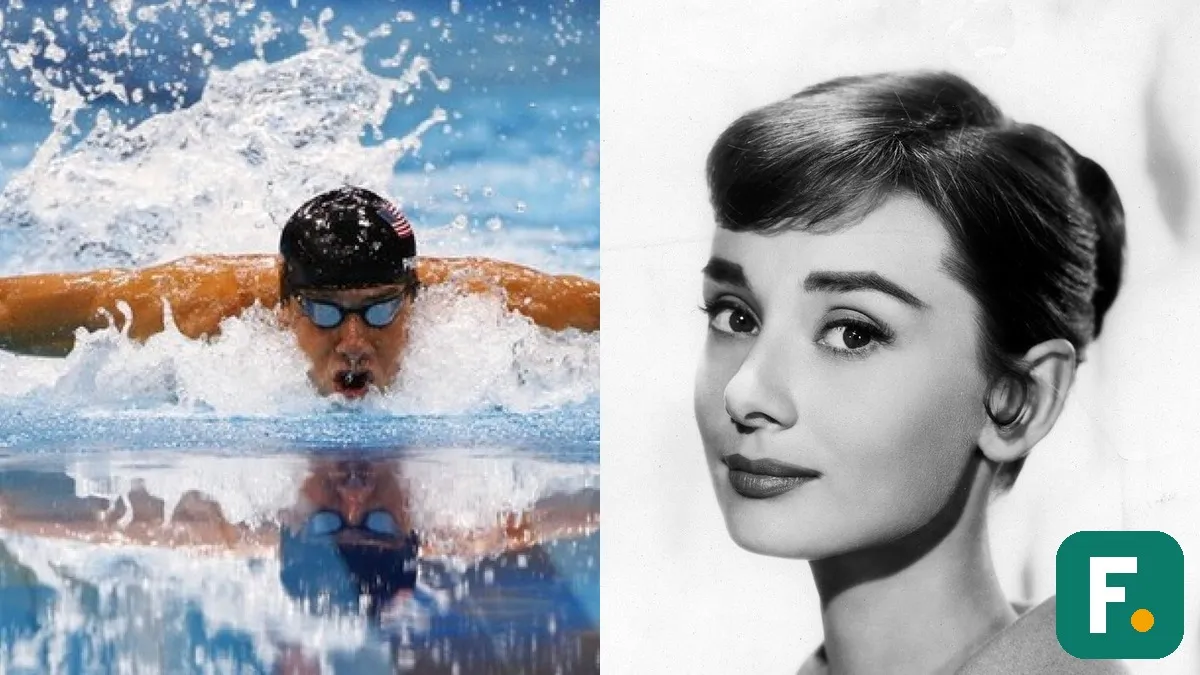
No other swimmer has ever collected as many Olympic medals as the American Michael Phelps, and few screen stars have stayed as loved for as long as the British actress and humanitarian Audrey Hepburn, whose fame in the 1950s and 1960s later turned into full time work for children in need. These two people share no family link, no joint work, and no generation in common. Hepburn passed away in 1993, while Phelps was still a seven year old child, so no partnership, friendship, or shared project exists between them.
Reading them side by side still makes sense, because under very different careers there is a similar pattern. Each one reached the very top only after years of quiet, repetitive discipline, each one had to deliver while the public watched from a young age, and each one is now remembered for a second kind of work as well: Phelps for speaking about mental health and for water safety, Hepburn for helping children. One kind of greatness was timed in seconds in a pool. The other was built through performances on screen and visits in the field. The facts below cover both lives in simple language, with no padding.
Quick Facts: Michael Phelps and Audrey Hepburn
| Detail | Michael Phelps | Audrey Hepburn |
|---|---|---|
| Full name | Michael Fred Phelps II | Audrey Kathleen Ruston, later Hepburn-Ruston |
| Born | June 30, 1985, Baltimore, Maryland, USA | May 4, 1929, Ixelles, Brussels, Belgium |
| Died | Living | January 20, 1993, Tolochenaz, Switzerland, aged 63 |
| Main field | Competitive swimming | Film acting, then humanitarian work |
| Best known for | 28 Olympic medals, 23 gold, 8 golds at Beijing 2008 | Roman Holiday, Breakfast at Tiffany's, My Fair Lady, UNICEF work |
| Career peak | 2004 to 2016, five Olympic Games | 1953 to 1967 in film, 1988 to 1993 with UNICEF |
| Public profile | Very public in sport, later open about mental health | Very public in film, private in personal life |
| Reported wealth | About $100 million estimate, from sport and endorsements | No single reliable public total; studio era earnings are not directly comparable to modern sports wealth |
Wealth figures in this article are estimates, not official bank balances. Modern sports earnings, film salaries from the 1950s and 1960s, and humanitarian work cannot be compared as if they were the same kind of income. The figures here give a rough scale for the swimmer only, and no fixed total is claimed for the actress, because no reliable public total exists.
Also Read: Cara Delevingne and Gene Hackman: Two Very Different Lives in Fame
Who Is Michael Phelps?
Michael Phelps, a retired American competitive swimmer, is commonly described as the greatest swimmer ever and the Olympian with the largest medal haul on record. Across his Olympic career he collected 28 medals in all, made up of 23 gold, 3 silver, and 2 bronze. In individual events alone he still leads the all time lists, with 13 golds and 16 medals of any color. Butterfly, individual medley, and freestyle were his strongest strokes. Between Sydney in 2000 and Rio in 2016 he appeared at five Olympic Games, and over his career he broke the world record 39 times.
People also called him The Baltimore Bullet and the Flying Fish. One nickname points to his home city and his pace, the other to how at ease he seemed in water. What sat behind both nicknames was a demanding daily routine of early starts and long sessions, shaped by coach Bob Bowman, who encouraged targets that looked out of reach to most observers. That routine, rather than any one race, is the main reason the medal total grew so large.
Also Read: Aaron Rodgers and Radhakishan Damani: Two Different Paths to the Top
Michael Phelps: Childhood and the Path to the Olympics
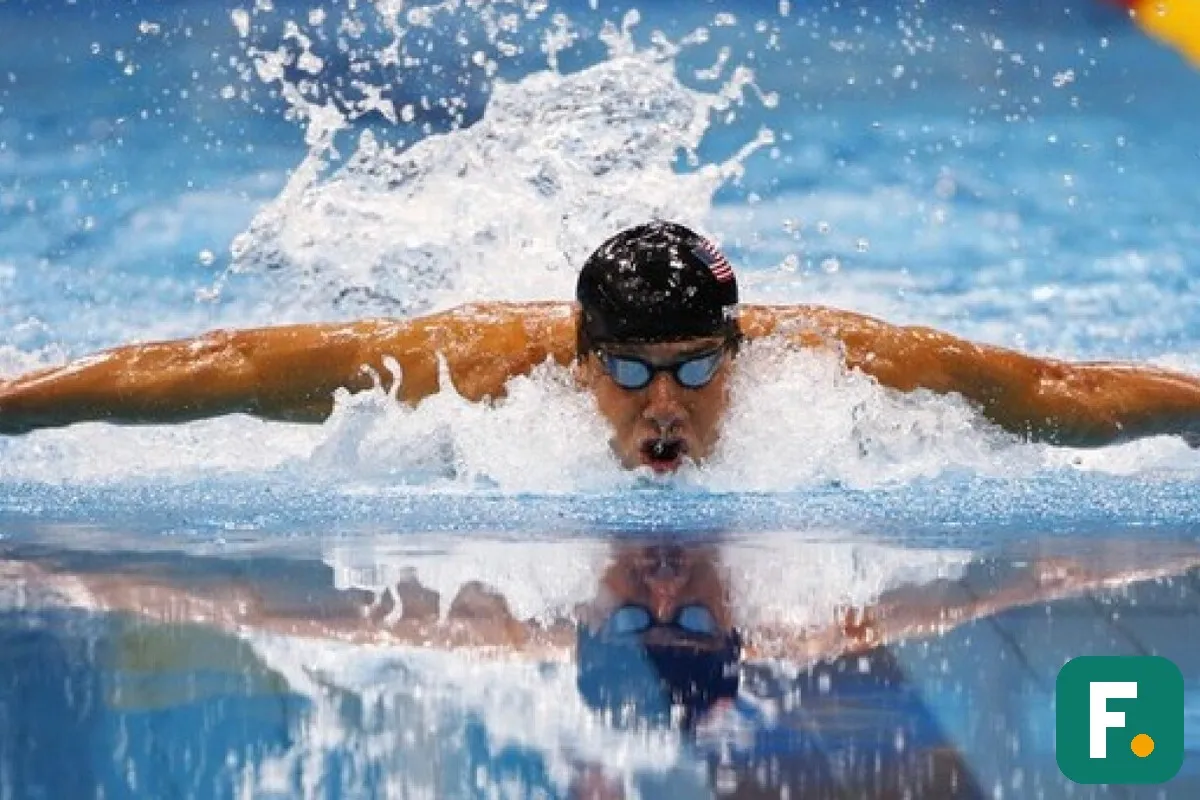
The city of Baltimore, Maryland, was his birthplace, and June 30, 1985, was his birth date. In his family he was the third child, younger than his sisters Whitney and Hilary. When he turned nine, his parents ended their marriage. During childhood, doctors diagnosed attention deficit hyperactivity disorder, or ADHD, and sitting still at school was a struggle for him. The pool offered a different setting, one where energy and concentration counted as strengths. He became a member of the North Baltimore Aquatic Club at seven, and working with Bob Bowman, his ability stood out almost at once.
Phelps reached the Sydney 2000 Olympic team at fifteen, ending a 68 year wait for a male swimmer that young on the United States team. Sydney brought no medal, only fifth place in the 200 meter butterfly, yet it proved he could already compete with the best. In 2001, when he was 15 years and 9 months old, he broke the world record in the 200 meter butterfly, the youngest male swimmer to do so in history. After that, observers stopped asking if Olympic medals would come, and started asking how many would follow.
Athens in 2004 delivered his first Olympic medals. Over seven days, in an outdoor pool under Mediterranean heat, he raced 17 times. His opening gold came in the 400 meter individual medley, timed at 4 minutes 8.26 seconds, a new world record. Further golds followed in the 200 meter butterfly, again in world record time, the 200 meter individual medley, the 100 meter butterfly, and two relay events. Bronze also came his way in the 200 meter freestyle and with the 4x100 meter freestyle relay team. Athens left him with six golds and two bronzes, a haul that equalled the all time single Games medal record.
Michael Phelps: Beijing 2008 and the Peak of Swimming
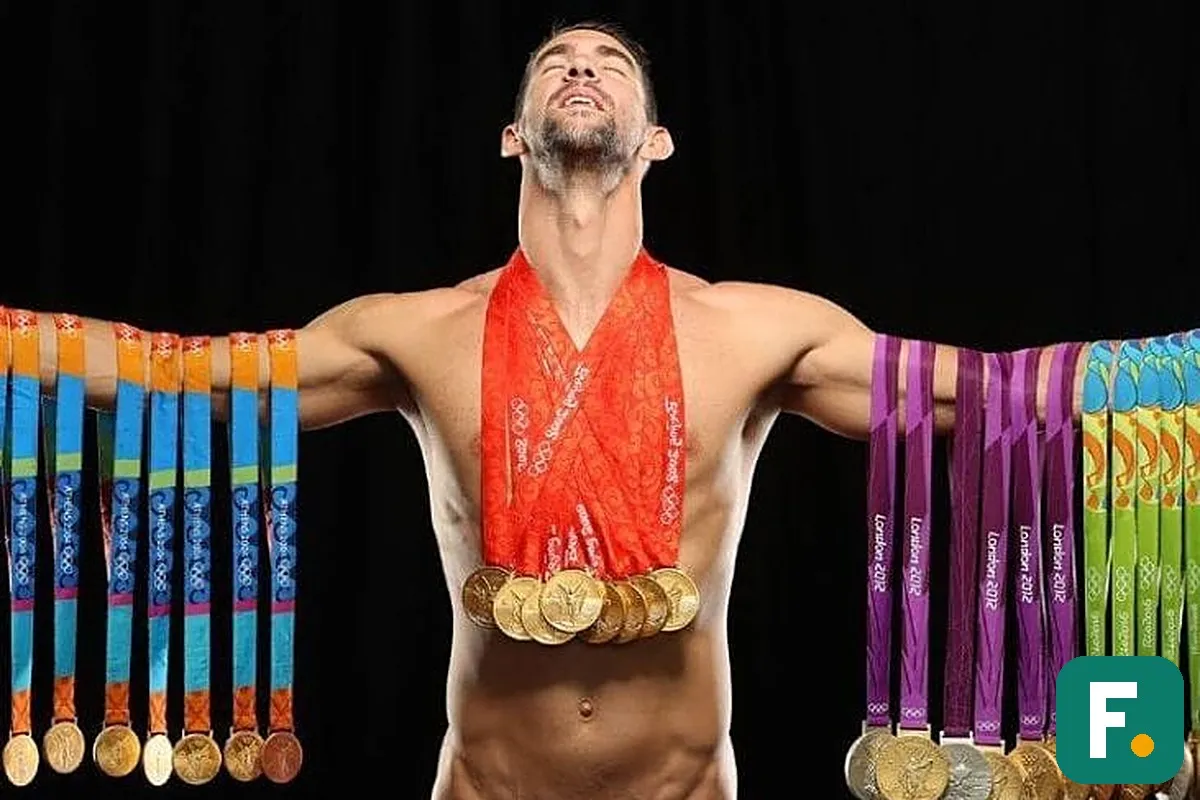
No performance in Phelps career tops Beijing in 2008, and few Olympic performances in any sport are talked about as often. He took part in eight events there and finished first in every one, moving past the seven golds at one Games that fellow American Mark Spitz had set in 1972. Gold came in the 400 meter individual medley, the 4x100 meter freestyle relay, the 200 meter freestyle, the 200 meter butterfly, the 4x200 meter freestyle relay, the 200 meter individual medley, the 100 meter butterfly, and the 4x100 meter medley relay, five on his own and three as part of a team.
Twice in Beijing the run came close to breaking. During the 4x100 meter freestyle relay, France led on the last lap until United States anchor Jason Lezak closed the gap in the closing meters and saved the streak. In the 100 meter butterfly final, Serbia Milorad Cavic led for most of the race, before Phelps touched first by 0.01 seconds, a margin smaller than a fingertip. Then, in the 200 meter butterfly final, water filled his goggles mid race and hid the wall from view, yet he still took gold in 1 minute 52.03 seconds, another world record. When Beijing closed, the 23 year old already owned 14 Olympic golds, a career total no one had reached before.
"I think goals should never be easy, they should force you to work, even if they are uncomfortable at the time."
Michael Phelps, from No Limits: The Will to Succeed
The quote above fits Beijing well. Phelps did not aim for a safe target. He aimed for eight golds, a target no one had ever reached, and he trained for years with that number in mind. The quote also fits the rest of his career. After Beijing, he could have stopped as the greatest swimmer alive. Instead he kept setting harder goals, including a comeback after retirement, because easy goals did not hold his attention.
Michael Phelps: London, Rio, and Life After the Pool
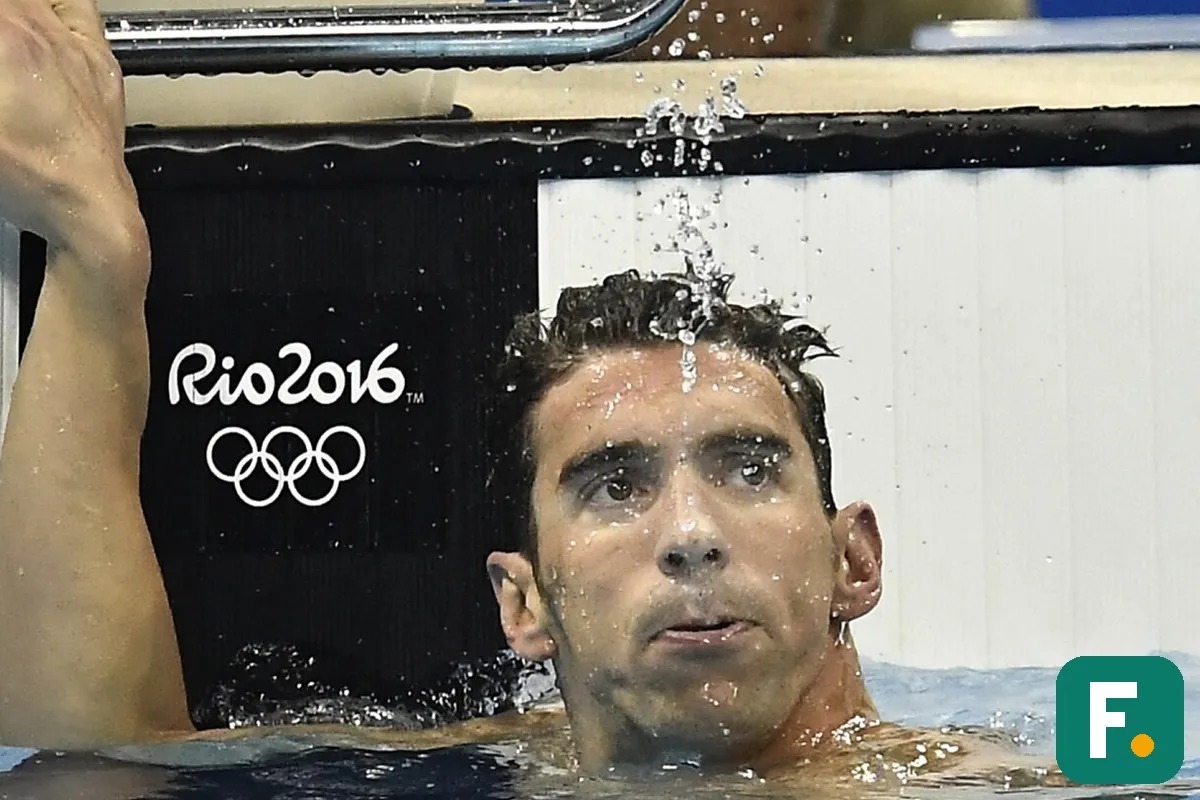
London in 2012 added four golds and two silvers to his collection, lifting his Olympic total to 22, more than any Olympian had ever held at that point. He then announced that he was retiring. By spring 2014 that decision had changed, and he was training again with the Rio Games in his sights. His fifth and last Olympic appearance came at Rio 2016, where his team picked him to carry the United States flag into the opening ceremony. Aged 31 in Rio, he added five more golds and one silver, closing his Olympic story at 28 medals in total.
Once Rio ended, work away from racing took over. The Michael Phelps Foundation, which he had set up after the 2008 Games with a $1 million bonus from Speedo, works to spread swimming, water safety, healthy living, and mental wellness among young people. Phelps has also talked openly about living with depression and anxiety, and about dark thoughts that followed the 2012 Games. By speaking in public he hopes to lower the stigma around such struggles and to push other people, athletes in particular, toward asking for help. Producing the HBO documentary The Weight of Gold, on mental health in elite sport, was part of the same effort. Advocacy of this kind now forms a large part of his public identity, next to the medals themselves.
- Sydney 2000: Olympic debut at 15, fifth in the 200 meter butterfly.
- Athens 2004: Six gold, two bronze.
- Beijing 2008: Eight gold, a single Games record.
- London 2012: Four gold, two silver, then first retirement.
- Rio 2016: Five gold, one silver, final retirement at 31.
- Total: 28 Olympic medals, 23 gold, 3 silver, 2 bronze.
Who Is Audrey Hepburn?
Audrey Hepburn, a British actress and humanitarian, was born in Belgium, to a mother from the Netherlands and a father from Britain. The American Film Institute places her third among the great female screen legends of classical Hollywood, and the International Best Dressed List Hall of Fame also includes her name. An Academy Award came her way for her first major Hollywood part, and she belongs to the small group of performers who have won competitive Academy, Emmy, Grammy, and Tony Awards, together called EGOT. Many people who admired her films most still call her later work for children in need her greatest role.
Fashion writers talked about Hepburn almost as much as film critics did. Clean lines, simple elegance, ballet flats, Capri pants, and the little black dress defined her look. Where many stars of her era chose loud glamour, she chose something quiet and graceful that ordinary readers could copy, which helps explain why fashion pages still return to her today. That calm public image hid a hard childhood in wartime Europe and a work ethic formed in ballet, where exactness and repetition counted just as much as natural talent.
Audrey Hepburn: War, Ballet, and Roman Holiday

Her birth name was Audrey Kathleen Ruston, and she arrived on May 4, 1929, in Ixelles, a district of Brussels in Belgium. Baroness Ella van Heemstra, a Dutch aristocrat, was her mother, while Joseph Victor Anthony Ruston, a British businessman, was her father. Childhood took her between Belgium, England, and the Netherlands, and from 1936 to 1939 she was at boarding school in Kent, England. By the time the Second World War started, she was living in the Netherlands under German occupation. Food ran short, and as a teenager she went hungry to the point of malnutrition. She never forgot that time, and it later gave direction to her humanitarian work.
Once the war ended, Hepburn studied ballet in London, only to hear that she was both too tall and too old to rise to prima ballerina. Work as a chorus girl in West End musical theatre followed, along with small parts in films. The turning point arrived when French writer Colette pressed for Hepburn to take the title part in the Broadway stage play Gigi in 1951. A Paramount screen test came next, and then the lead in Roman Holiday in 1953, a William Wyler film in which she acted opposite Gregory Peck. In it she played Princess Ann, a princess who runs away and spends a day in Rome with an American reporter. Stardom followed at once.
For Roman Holiday, Hepburn received the Academy Award for Best Actress, and no actress before her had won an Academy Award, a Golden Globe Award, and a BAFTA Award for one and the same performance. That same year brought a Tony Award for Best Actress in a Play, for Ondine on Broadway. At 24, when the Oscar arrived, she had moved from chorus girl to the top of Hollywood within a few short years. Sabrina in 1954, Funny Face in 1957, and The Nun's Story in 1959 built on that start, before her most famous part of all.
Audrey Hepburn: Stardom, Style, and Givenchy
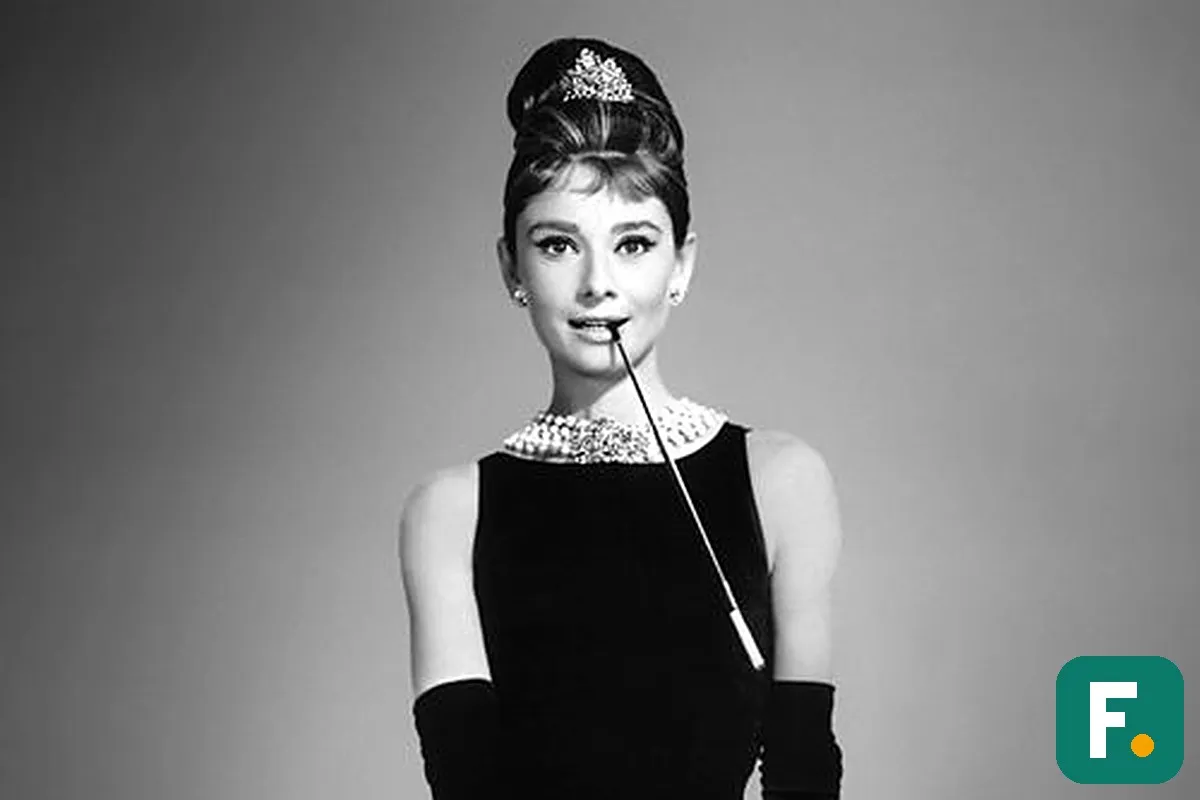
Breakfast at Tiffany's in 1961 cast Hepburn as Holly Golightly, a young New York socialite, in a Blake Edwards film drawn from a Truman Capote novella. Dawn on Fifth Avenue opens the film, with Holly in a black dress, pearls, and sunglasses, eating a pastry outside the Tiffany and Company window. That picture grew into one of the best known images in all of film. A fourth Oscar nomination followed for Hepburn, while Moon River took the Oscar for Best Original Song. No Oscar came to her for this part, yet the image followed her for life, turning up in posters, fashion books, and Halloween costumes.
With French designer Hubert de Givenchy, her fashion partnership started on Sabrina in 1954, when he was brought in to design her wardrobe for that film. Friendship grew between them, and Givenchy went on to create her costumes for Love in the Afternoon, Funny Face, Breakfast at Tiffany's, Charade, Paris When It Sizzles, and How to Steal a Million, as well as dressing her away from the camera. He later made the perfume L'Interdit for her alone. A look that was simple, elegant, and never overdone stood in sharp contrast to showy glamour, and it helped turn her into a fashion icon in her own right, apart from her film work.
Charade in 1963, a thriller romance opposite Cary Grant that remains popular, and My Fair Lady in 1964, where she played Eliza Doolittle opposite Rex Harrison, were her other major films of this period. Much of her singing in My Fair Lady was dubbed by another voice, a point film histories often record, yet her performance still carried the film to major success. Wait Until Dark in 1967, a thriller, was her last major film part, and it brought another Academy Award nomination. Full time acting then gave way to family life and, in time, humanitarian work. Two marriages marked her personal life, first to actor Mel Ferrer from 1954 to 1968, then to Italian psychiatrist Andrea Dotti from 1969 to 1982. Her sons were Sean Ferrer and Luca Dotti, and Dutch actor Robert Wolders was her later partner.
Audrey Hepburn: UNICEF and a Lasting Legacy
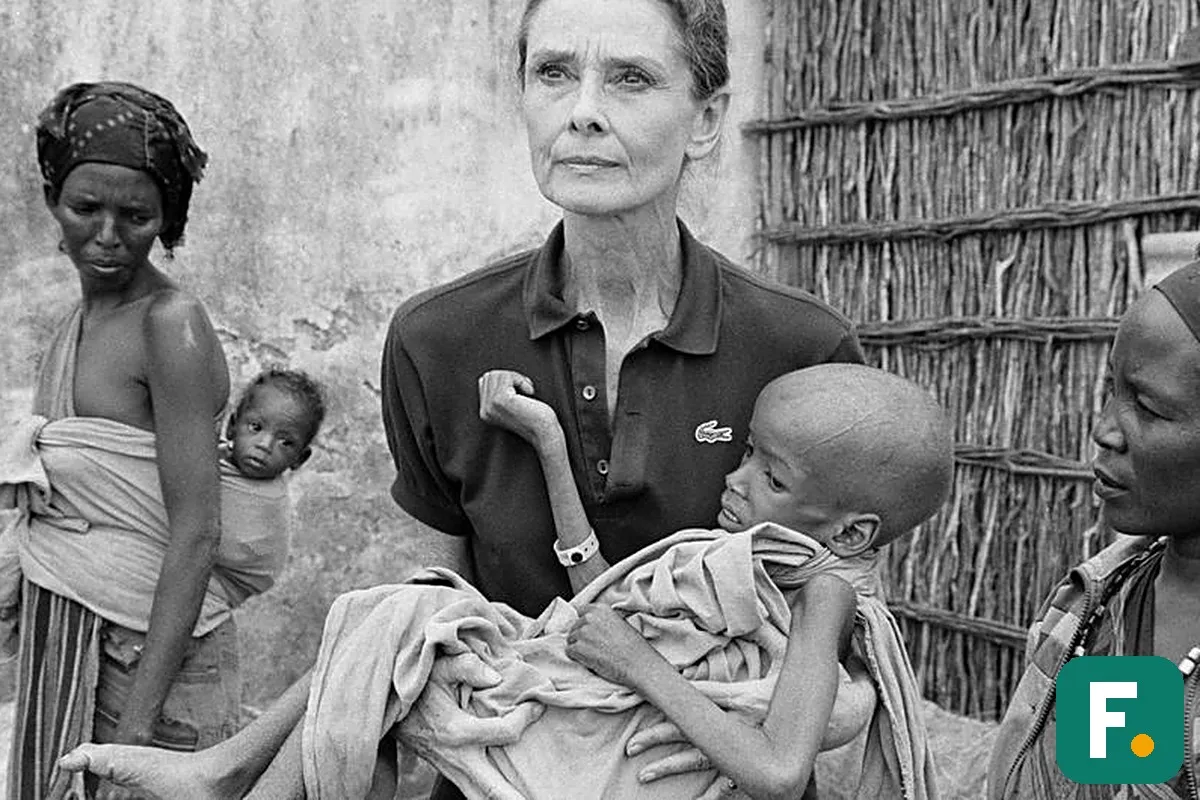
Support for UNICEF had begun for Hepburn as early as 1954, yet full time humanitarian work only started in the late 1980s. From 1988 until her death in 1993 she held the post of UNICEF Goodwill Ambassador. Ethiopia in 1988, hit by drought and conflict that had produced famine, was her first field mission. Turkey, Venezuela, Ecuador, Sudan, Bangladesh, and Somalia followed, with visits to schools, clinics, and feeding centers, and talks with the media about everything she witnessed. On some days she gave as many as 15 interviews, driven by the belief that fame had value only when it drew attention to children with no voice of their own.
This work came from personal memory, not ceremony alone. Food aid had reached her herself as a child in wartime Netherlands, and she often spoke of knowing hunger at first hand. Somalia in September 1992, where drought and civil war were killing children, was one of her last missions, and she helped push that crisis into world view. The United States Presidential Medal of Freedom, the highest civilian award in the country, came to her in December 1992 for her UNICEF work. Just one month later, on January 20, 1993, appendiceal cancer ended her life at her home in Tolochenaz, Switzerland, when she was 63. After her death, the Academy gave her the Jean Hersholt Humanitarian Award, and her EGOT set was completed by a posthumous Emmy in 1993 for Gardens of the World with Audrey Hepburn and a posthumous Grammy in 1994 for Audrey Hepburn's Enchanted Tales.
- Oscar: Best Actress for Roman Holiday, 1954.
- Tony: Best Actress in a Play for Ondine, 1954, plus a Special Tony in 1968.
- Emmy: Outstanding Individual Achievement, Informational Programming, for Gardens of the World, 1993, posthumous.
- Grammy: Best Spoken Word Album for Children, for Audrey Hepburn's Enchanted Tales, 1994, posthumous.
- Other honors: Three BAFTA Awards for Best British Actress, Presidential Medal of Freedom in 1992, Jean Hersholt Humanitarian Award in 1993.
Michael Phelps vs Audrey Hepburn: A Direct Comparison
- How they became known: Phelps became known through timed races, where success is measured in hundredths of a second and failure is public at once. Hepburn became known through performances, where success is judged by audiences and critics over time.
- Age at peak: Phelps peaked in his twenties, with his greatest Olympic result at 23 in Beijing. Hepburn peaked in her twenties too, with her Oscar at 24, but her second career in humanitarian work came in her late fifties and early sixties.
- Pressure: Phelps faced pressure to win in a single race, with millions watching live. Hepburn faced pressure to repeat a breakthrough, to carry a film, and to live up to a public image of elegance.
- Discipline: Both relied on repetition. Phelps repeated strokes, turns, and training sets for years. Hepburn repeated ballet steps, lines, and takes until a performance looked effortless.
- Life after fame: Phelps used his fame to talk about mental health, a subject many athletes avoided. Hepburn used her fame to talk about children in war and famine, a subject many stars avoided because it was not glamorous.
- Legacy test: Phelps legacy will be judged by whether his medal records stand and whether his advocacy helps athletes speak openly. Hepburn legacy will be judged by whether her films still move audiences and whether her UNICEF work is remembered as more than a celebrity visit.
Two different answers to one question emerge from this comparison: once you reach the top, what comes next? A quiet retirement after Beijing would have been easy for Phelps, already the greatest swimmer alive, and a quiet retirement after her last major film would have been easy for Hepburn, already a beloved star. Neither chose that path. Phelps returned, retired a second time, and then talked openly about troubles that success had not fixed. Hepburn stepped away from the screen and travelled to places cameras rarely visit. In each case the later chapter gave deeper meaning to the earlier one, by treating fame as a tool to use, not as a goal in itself.
What Readers Often Get Wrong
- They are not related and they never met as collaborators. Hepburn died in 1993, when Phelps was a child, so any story that links them as partners is false.
- Phelps did not win 28 gold medals. He won 28 Olympic medals in total, of which 23 were gold, 3 were silver, and 2 were bronze.
- Hepburn did not win an Oscar for Breakfast at Tiffany's. She was nominated for that film, but her competitive Oscar win was for Roman Holiday.
- Hepburn was not American. She was British, born in Belgium to a Dutch mother and a British father, and she spent her wartime childhood in the Netherlands.
- Phelps did not retire for good in 2012. He retired, returned in 2014, and finished his Olympic career at Rio in 2016.
- Hepburn UNICEF work was not a short photo visit. She served as a Goodwill Ambassador from 1988 until her death in 1993, traveled to more than 20 countries, and worked through serious illness in her final year.
Frequently Asked Questions
1. Are Michael Phelps and Audrey Hepburn related?
No. They are not relatives, friends, or business partners. They work in different fields and different eras, and this article compares them only as two famous biography subjects who both reached the top through discipline and then used fame for work beyond their first careers.
2. How many Olympic medals did Michael Phelps win?
He won 28 Olympic medals in total: 23 gold, 3 silver, and 2 bronze, across five Olympic Games from 2000 to 2016. His record at a single Games was eight gold medals at Beijing in 2008, a record that had never been reached before.
3. What film won Audrey Hepburn her Oscar?
Roman Holiday in 1953 won her the Academy Award for Best Actress. She played Princess Ann, a runaway princess in Rome, opposite Gregory Peck. She also won a Golden Globe and a BAFTA for the same performance, the first actress to win all three for one role.
4. What does EGOT mean, and did Hepburn achieve it?
EGOT means winning an Emmy, a Grammy, an Oscar, and a Tony. Hepburn won an Oscar in 1954 and a Tony in 1954, then completed the set after her death with an Emmy in 1993 and a Grammy in 1994. She is one of only a small number of performers to have won all four competitive awards.
5. Did Michael Phelps really win eight gold medals in one Olympics?
Yes. At Beijing in 2008, he entered eight events and won gold in all eight, breaking Mark Spitz record of seven golds at a single Games from 1972. Two races were very close: the 4x100 meter freestyle relay, won on the final lap, and the 100 meter butterfly, won by 0.01 seconds.
6. What did Audrey Hepburn do for UNICEF?
She served as a UNICEF Goodwill Ambassador from 1988 until her death in 1993. She traveled to countries including Ethiopia, Sudan, Bangladesh, and Somalia, visited children in clinics and feeding centers, and gave many media interviews to draw attention to hunger, war, and disease. She received the Presidential Medal of Freedom in December 1992 for that work.
Conclusion
Greatness, these two lives show, does not take a single shape. Phelps greatness can be tallied in numbers: 28 medals, 23 golds, 39 world records, and a one Games record that may survive for a long time. Hepburn greatness resists that kind of counting: it survives in performances that still feel fresh, in a style that still shapes fashion, and in humanitarian trips that carried her from film sets to feeding centers. Readers in a hurry can take the quick answer from the table at the top. Readers looking for a lesson can take the contrast instead: spend years training for a moment measured in seconds, or spend years rehearsing for a performance remembered for decades, then put the fame that follows to use for something bigger than yourself. That shared lesson links two very different lives.

About the author
Facts of Media Editorial Team
The Facts of Media Editorial Team is dedicated to delivering accurate, informative, and engaging content across media, technology, business, entertainment, and trending topics. Our team researches and reviews information to provide readers with reliable insights, useful facts, and the latest updates.
Related Articles
More in Biography
Tom Kennedy and Anna Wintour: Two Very Different Kinds of Power
Biography feature
BiographyTom Kennedy and Anna Wintour biography with Name That Tune, Password Plus, Vogue, the Met Gala, and two different routes to the top, explained simply.
Read article
Stephen King and Richard LeFrak: Two Very Different Kinds of Power
Biography feature
BiographyStephen King and Richard LeFrak biography with Carrie, The Shining, It, LeFrak City, Newport, and two different routes to the top, explained simply.
Read article
Jennifer Lawrence and Jim Taiclet: Two Very Different Kinds of Power
Biography feature
BiographyJennifer Lawrence and Jim Taiclet biography with an Oscar, The Hunger Games, Lockheed Martin, the F-35, and two different routes to the top, explained simply.
Read article